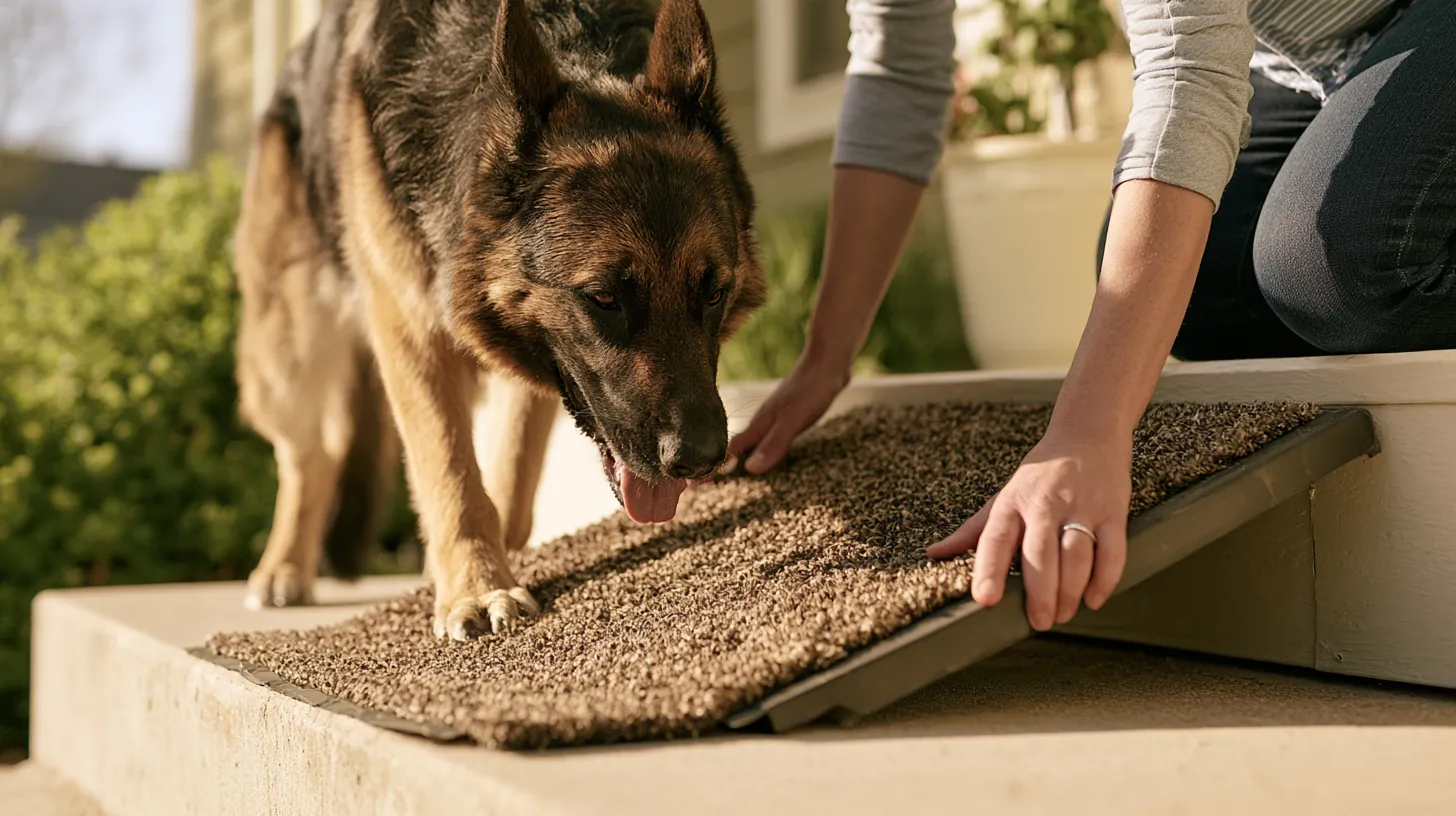
Pet owner holding a dog at a veterinary clinic while reviewing an emergency bill after searching Grace Loan Advance
  1. Home
  2. Blog
  3. How to Cover an Emergency Vet Bill: A Grace Loan Advance Guide
Pet Care

How to Cover an Emergency Vet Bill: A Grace Loan Advance Guide

If a sudden vet bill sent you searching Grace Loan Advance, the fastest safe path is simple: get a written estimate, ask the clinic about payment options, then compare the true cost of cards and personal loans before you sign.

01

What should you do first when the emergency vet bill arrives?

Ask for a written, itemized estimate with a low and high range before treatment starts. That one page tells you how much money you actually need, what can wait, and which payment options the clinic accepts.

Emergency clinics often ask for a deposit at admission, sometimes a large share of the low estimate. Staff are used to cost questions, so asking is normal and does not delay care. A clear number also stops you from borrowing more than the visit will cost.

  1. Ask for the estimate in writing, split into exam, diagnostics, treatment and hospital stay.
  2. Ask which items are urgent today and which could be done at a follow-up visit with your regular vet.
  3. Ask what deposit is due now and when the balance is due.
  4. Ask whether the clinic offers an in-house payment plan or works with an outside financing partner.
  5. Write down the total you need, then add a small cushion for medication and a recheck visit.

Once you have that number, you can compare options calmly. Borrowing a precise amount, rather than a round guess, keeps your monthly payment and total interest lower.

02

Why emergency vet bills vary so much

Emergency vet costs depend on your pet's size, the problem, the tests needed, and whether your pet stays overnight. A simple visit may cost a few hundred dollars, while surgery or several nights of intensive care can reach several thousand.

Location matters too. After-hours emergency hospitals usually charge more than a regular daytime clinic because they staff specialists and run around the clock. Two clinics in the same city can quote very different totals for similar care.

Common parts of an emergency vet estimate (what each line usually covers)
Estimate lineWhat it usually coversQuestion to ask
Emergency exam feeThe first assessment by the on-duty vetIs this fee credited toward treatment?
DiagnosticsBlood work, X-rays, ultrasoundWhich tests change the treatment plan today?
TreatmentFluids, medication, wound care, proceduresIs there a lower-cost option that is still safe?
HospitalizationOvernight monitoring and nursing careWhat is the daily rate and the likely number of days?
SurgeryAnesthesia, surgeon time, operating roomIs the quote for the full surgery or only the first stage?
Go-home costsMedication, cone, special food, recheckCan the recheck be done by my regular vet?

Use the high end of the range when you plan. If the final bill comes in lower, you can repay extra early on most installment loans. Always confirm there is no prepayment penalty before you accept an offer.

03

Ways to pay an emergency vet bill, side by side

The main ways to cover a vet emergency are savings, a clinic payment plan, a credit card, buy now pay later, a cash advance app, or a personal loan. Each one trades speed, cost and flexibility differently.

Options for an urgent vet bill compared
OptionHow it worksWatch out for
Emergency savingsPay part or all of the bill from cash on handLeaving yourself with no cushion for the next surprise
Clinic payment planThe vet lets you pay the balance over a few monthsNot every clinic offers one, and many want a large deposit
Credit card you already haveCharge the bill and pay it down over timeVariable interest and minimum payments that stretch the debt out
Promotional vet credit cardA card for medical or vet costs with an intro periodDeferred interest can be charged back to day one if not paid in full in time
Buy now pay laterSplit a smaller bill into a few paymentsLow limits and late fees; not accepted at every clinic
Cash advance appSmall advance against your next paycheckAmounts are usually too small for surgery, and fees or tips add up
Personal loanFixed amount, fixed payment, set end dateAPR set by the lender; origination fees on some offers

Personal loans fit best when the bill is larger than what a card can carry comfortably, and you want one fixed payment that ends on a known date. For smaller bills, a clinic plan or a card you can clear within a month or two is often cheaper.

Here is how that looks in practice. Dana, a nurse in Ohio, got a $1,500 estimate for her cat's overnight stay, with half due at admission. She put the $750 deposit on a credit card so treatment could start, then requested a personal loan for the full amount the next morning.

At an example 24.99% APR over 12 months, a $1,500 loan works out to about $142.56 a month and roughly $210.71 in interest. When the funds arrived, Dana paid off the card balance and the remaining clinic invoice, leaving one fixed payment with a clear end date instead of two open balances.

You can read a full overview of financing options for pets on our pet care loans guide, including when each one makes the most sense.

04

What a personal loan for a vet bill can cost

At an example 24.99% APR, borrowing $1,500 for 12 months costs about $142.56 a month and roughly $1,710.71 in total. Your own rate depends on your credit, income and the lender's rules.

Personal loan APRs typically run from about 6% to 36%, and many lenders cap at 35.99%. Our representative example is $2,000 borrowed over 12 months at 24.99% APR, which works out to about $190.08 a month and $2,280.94 repaid in total, or $280.94 in interest. These are estimates, not offers.

Estimated payments at 24.99% APR for common vet bill amounts (examples only)
Amount6 months12 months24 monthsTotal repaid over 12 months
$500$89.51$47.52$26.68≈$570.24
$1,000$179.02$95.04$53.37≈$1,140.47
$1,500$268.53$142.56$80.05≈$1,710.71
$2,000$358.05$190.08$106.73≈$2,280.94
$2,500$447.56$237.60$133.42≈$2,851.18

A shorter term means a higher payment but less interest. On $1,000, a 6-month term costs about $74 in interest at this example rate, while 24 months costs about $281. Pick the shortest term whose payment you can still cover after rent, food and your pet's ongoing care.

Try your own numbers in our personal loan payment calculator, and see how lenders price risk on our current personal loan rates page.

05

What people searching Grace Loan Advance for a vet bill should know

Most people who search Grace Loan Advance during a pet emergency want one thing: a quick way to see if a lender may offer a personal loan. Our free request form sends your details to lenders in our network.

We are a connector, not a lender. We do not make credit decisions, set rates or fund loans. If a lender makes an offer, that lender sets the APR, the term and the decision, and it sends the money. Using our service is free and carries no obligation to accept anything.

  • Requests can range from $500 to $5,000.
  • Approval, offers and timing are never guaranteed.
  • Our service is not available in every state.
  • You can decline any offer, even after you see the full terms.

Readers who look up grace advance loans or graceloan before applying often want to know what lenders check. Our guide to personal loan eligibility covers income, age, residency and bank account basics, and our post on Grace Loan Advance requirements goes deeper on documents.

06

How to talk with your vet about cost without delaying care

Tell the care team your budget early and ask them to build a treatment plan around it. Vets often have more than one safe approach, and they can only offer it if they know money is tight.

Being honest about cost is not the same as asking for less care. It lets the team rank what is urgent tonight, what can be watched, and what your regular vet can handle later at daytime prices.

Questions that often lower the bill

  • Can my pet be stabilized tonight and moved to my regular vet tomorrow?
  • Is outpatient care with close check-ins an option instead of a hospital stay?
  • Are there generic medications or a shorter course that works?
  • Can some tests wait until we see how my pet responds to treatment?
  • Will you hold the balance for a few days while my financing is reviewed?

Ask for any change to the plan in writing, with an updated estimate. A paper trail helps if the final invoice does not match what you agreed.

07

How fast can money arrive for a vet emergency?

A clinic payment plan or a credit card works at the front desk the same day. A personal loan usually takes longer, because the lender must review the request, verify details and then send funds to your bank account.

Many lenders fund within one to a few business days after final approval, but timing depends on the lender, your bank and how fast you return any documents. We cannot promise any funding speed.

  1. Cover the deposit

    Use a card or savings for the deposit so treatment can start right away.

  2. Submit your request

    Fill out the request form with the amount from your written estimate.

  3. Review any offer

    Check the APR, monthly payment, total repaid and any origination fee before accepting.

  4. Pay down the card

    If you accept a loan, use the funds to clear the card balance quickly so interest does not build.

Have your ID, recent pay stub or bank statement, and checking account details ready. Missing documents are one of the most common reasons funding slows down.

08

When borrowing for a vet bill is the wrong move

Skip new debt when the payment would crowd out rent, utilities or food, or when a cheaper option already covers the bill. A loan that strains your budget can make the next emergency harder to handle.

  • The bill is small. If you can clear it from savings or within a month or two on a card, a loan adds cost and paperwork.
  • The clinic offers an interest-free plan. A short in-house plan usually beats any loan on price.
  • Your pet insurance will reimburse most of it. A card may only need to bridge the few weeks until the claim pays.
  • The payment does not fit. At 24.99% APR, $2,500 over 12 months is about $237.60 a month. If that is more than you have spare, choose a smaller amount or a longer term.

Borrow only what the estimate shows, read every term, and avoid any company that asks for an upfront fee before you get a loan. Legitimate lenders take fees out of the loan or bill them later, never as a gift card or wire payment.

09

How to prepare for the next pet emergency

A small pet emergency fund plus a clear plan for larger costs is the best protection. Saving $50 a month builds $600 in a year, which covers many exam fees and basic tests on its own.

Look at pet insurance early, while your pet is young and healthy, since many policies exclude conditions that show up before you enroll. Read the deductible, the reimbursement rate and any yearly cap so you know what you would still owe.

One habit that helps: keep a note on your phone with your vet's after-hours number, the nearest emergency hospital, and your payment plan for a large bill. Deciding in advance takes pressure off a stressful night.

If surgery is likely, such as for an older dog with joint trouble, our article on how to finance pet surgery walks through planned procedures, quotes and term choices.

FAQ

Frequently asked questions

Can I get a personal loan for an emergency vet bill with fair credit?

Some lenders work with fair or rebuilding credit, but the APR is usually higher, often toward the upper end of the roughly 6% to 36% range. Income, existing debt and bank history also count, and no approval is guaranteed.

Will the vet clinic take a loan payment directly?

Most personal loans are deposited into your own bank account, and then you pay the clinic. Some clinics work with outside financing partners that pay them directly, so ask the front desk what they accept.

Should I put the deposit on a card and refinance it with a loan?

That can work if the loan APR is lower than your card rate and you use the loan funds to pay off the card right away. Compare the total cost of both before you decide.

Keep reading

Related guides

Related

On our site

About the author

Priya RamosHousehold Budget Writer. Priya writes about handling surprise costs — repairs, vet bills and short gaps between paychecks — without taking on more debt than needed.

No fee · No obligation

Ready to see your personal loan options?

One free request takes about five minutes. Lenders in our network set any offer, and you are never obligated to accept.

Start my request
Borrow $500–$5,000 · No obligationApply